Thursday, June 14, 2018

In Search of Some Dawsons


It may seem a taboo subject, in genealogy circles, to discuss using material from someone else's family tree. Do I copy other people's trees? Of course not. But I'm not afraid to take a peek.

Normally, when I'm in search of a potential candidate to receive a photograph I've rescued from an antique shop, one of the places I consult is the very one rich with other people's family trees: Ancestry.com. So, now that we're wondering just who that Hazel from Aberdeen, Washington, might have been, I've been trawling through all the family trees of parents who had five year olds in the 1900 census.

For this search, there is one requirement: that five year old needed to be a girl named Hazel. And she had to live close enough to Aberdeen to have her picture taken at the Finch studio in town.

Once I narrowed the search down to just a few possibilities, the next task is to take a long, hard look at just one of the candidates. That's the hypothesis-testing phase.

For that, I chose to focus on a little girl born in 1894 named Hazel Dawson. As we've already seen, her parents were fairly well situated, as her father, William, served as "city street commissioner." Her mother's Canadian heritage may have given her just the right dose of a sense of "proper" decorum.

Once I made that choice, I was off to see what could be found in the family trees posted on Ancestry. Unfortunately, in this instance there weren't that many choices. I found one well-sourced tree, but learned almost instantly that I couldn't pursue that resource; it was a private tree. Though I sent a carefully worded request, I haven't heard back from the researcher. Yet.

The other trees—believe me, there were very few of them—were either unsourced or had other signs indicating the researcher may not have been as careful as I would like to see.

Unless I hear back from the researcher of the private tree, it is likely this route will not provide any answers. With that realization, I needed to head in a different direction. My choice, at that point, was to consult the various newspaper collections I subscribe to.

I went first to GenealogyBank, unsure whether that would be a resource for newspapers from a town as tiny as Aberdeen in the early 1900s. Fortunately, in the manner of newspapers of that era, the larger city papers often carried news from the towns in the vicinity, in columns under subheadings bearing the name of each town. Thus, the Holquiam local news made its way into the Tacoma Daily Ledger, including an entry from Hazel Dawson's hometown on a social event in its January 12, 1908, edition. (If you are a GenealogyBank subscriber, you can view the entry here.)
The Girls' Swastika club of Holquiam, comprising the members of Mrs. McDonnel's Sunday school class, were entertained at her home on Karr avenue Saturday afternoon. After a short business meeting the afternoon was pleasantly spent in playing games, after which refreshments were served. 

That small entry was followed by a list naming the ten girls in attendance that day, with Hazel Dawson's name the last entry.

Hazel not only spent her childhood in Holquiam, that city right next to Aberdeen, but she had been married in Holquiam, as well. I had hoped to at least find some articles on her engagement or wedding, but nothing further showed up searching in that newspaper collection.

Switching search terms to locate Hazel by her married name, Giles, led to only one result: an obituary for Hazel and Harold Giles' daughter. The couple had had two children, a son and a daughter, but they had lost their son during the massive casualties inflicted during the Battle of the Bulge.

It was somewhat eerie reading the details in Hazel's daughter's recent obituary, especially with the thought heavy on my mind about last weekend's devastating loss of local history back in the county of Hazel's birth. The obituary was careful to mention the woman's grandfather, William Dawson, as "an early Washington State pioneer who settled in Axford Prairie near the Humptulips River in 1883." (Yes, there really is a river called by that name.)

The obituary also mentioned that this granddaughter had "many interests" including genealogy. It particularly struck me—thinking again of the recent loss of Aberdeen's many historic artifacts and documents—that she worked for a "library for local history" in Boulder, Colorado, where she and her family had settled, and that one of her projects there was "archiving photographs from Boulder's early days." How ironic if that woman turns out to have been the daughter of the child in the photograph I have from Aberdeen's "early days."

If only I could have asked her about it. Given her interest in such subjects, surely she would have known—or at least tried to find the answer for me.
Wednesday, June 13, 2018

When Current Events
Collide With Genealogical History


I had just sent off an email following up on my original inquiry to the local public library in Aberdeen, Washington, when it occurred to me that another avenue in researching just who our mystery Hazel of that hundred year old photograph might have been could be to access online resources for their genealogical society. After all, despite the decreased usage of genealogy forums, in their place we now have groups and pages for societies on Facebook.

Sure enough, there is a Facebook page for the Grays Harbor Genealogical Society in Washington. Encouraged to find that resource, I clicked over to that page to take a look. After all, some well-meaning societies are energetic about setting up social media outlets, but the enthusiasm sometimes falls by the wayside over the long haul.

What I saw when I landed on their page took all thoughts about Hazel out of my mind. In fact, what I saw was enough to take my breath away: in one day, a devastating fire wiped out the facility housing several nonprofit organizational offices, including that of the Grays Harbor Genealogical Society, as well as the Aberdeen Museum of History, which, in addition to other local history artifacts, housed a collection dedicated to Aberdeen native Kurt Cobain and his band, Nirvana.

While news of this event likely didn't make national headlines, thanks to the Internet, those of us not in the area can still see what this event means to those who are concerned with preserving local history. You can see reports here. And here. And here. Sobering.

In that one event, over one hundred years of local history was incinerated, a devastating thought. And here I was, coincidentally just trying to locate any photographs that could match up with the one token of Aberdeen history I hold in my own hands: the hundred year old photograph of a young girl named Hazel.


Tuesday, June 12, 2018

More Choices


Remember how the popularity of the name Hazel leaped from the decade of the 1880s to that of the 1890s? Now that we're circling the possibility of a Hazel born in the 1890s, we're talking about a young girl who had at least twenty thousand fellow cherubs born in that decade bearing the same name. Yep. Twenty thousand Hazels in the United States born in the 1890s.

That does not make our task any easier, in seeking to return to her family the abandoned photograph of Hazel from the Finch photography studio in Aberdeen, Washington.

Furthermore, despite finding a potential candidate for our Hazel yesterday, that result came to us, provided we limited our search only to residents of Aberdeen, itself, in the 1900 census. What if Hazel's family didn't live in the city, but traveled into town from a more rural part of the county to have her picture taken?

The trouble with searching for Hazels outside the city limits of Aberdeen is that, at that time, the county name was Chehalis, not Grays Harbor as it is today. Despite that fact, it is not possible to simply do a search on Ancestry for Hazels living in 1900 within the county of Chehalis. For some reason, that fact does not resonate with Ancestry's search engine. So, for instance, while I can call up a manageable number of results if I isolate the terms to Aberdeen specifically, if I broaden the search to include all of Chehalis county, the search mechanism somehow is stymied, giving me everything from a few Chehalis residents peppered in with thousands of others from all parts of Washington state and other states, too.

I eyeballed my way through fifteen pages of search results, and the end result was that it confirmed my hunch that there could be a lot more candidates for our Hazel. Even if we narrowed the margin of dates for her birth to, say, 1892 through 1896.

Beside the Hazel we found with the Owen family from Oregon, there were, for instance, the Hazels living in nearby Elma, Washington. Never mind that, at the turn of the century, Elma was a bustling metropolis of just under nine hundred people—it still managed to have not one, but three Hazels within our targeted age range: Hazel Preston, Hazel Thayer, and Hazel Clark.

But Elma wasn't the only town in the show. Take nearby Porter, Washington, home of five year old Hazel McPherson. Or seven year old Hazel Coghlan in Montesano. Or even three year old Hazel Dailey in Satsop. Besides, in rival Cosmopolis, we had Hazel Cole.

With the exception of Hazel Clark, who was an only child until the arrival of her baby sister in 1899, all the other Hazels had multiple siblings. Somehow, I just don't see a three year old in such a carefully-kept outfit surviving a rough and tumble ride into town with a mother who was distracted with the task of keeping multiple children's appearances pristine for the photographer.

However, there was one other possibility. In Hoquiam, the town which was situated cheek-and-jowl with Aberdeen, there was another Hazel. This Hazel was, by 1900, aged six, and was the only child of her parents, William and Mollie Dawson. Mollie had come from Canada as a child, and her husband, William, was originally from Ohio.

What makes this couple doubly interesting is that William Dawson served as "city street commissioner," according to the 1900 census, an occupation setting him apart from the loggers, mill wrights and railroad workers who were the dads of the other Hazels. Other than for Hazel Coghlan, whose father was editor of a local newspaper, in the more rural settings in Chehalis County, it seems less plausible that any other young girl's perfect attire would have presented as well as our Hazel's, if only by reason of both the distance required to travel to the Aberdeen studio and social status of the families enabling them to dress their child in such a beautiful, well-kept outfit.


Above: Excerpt from the 1900 U.S. Census for Holquiam in Chehalis County, Washington, showing the household of William and Mollie Dawson; courtesy Ancestry.com. 

Monday, June 11, 2018

Choosing the Right Hazel


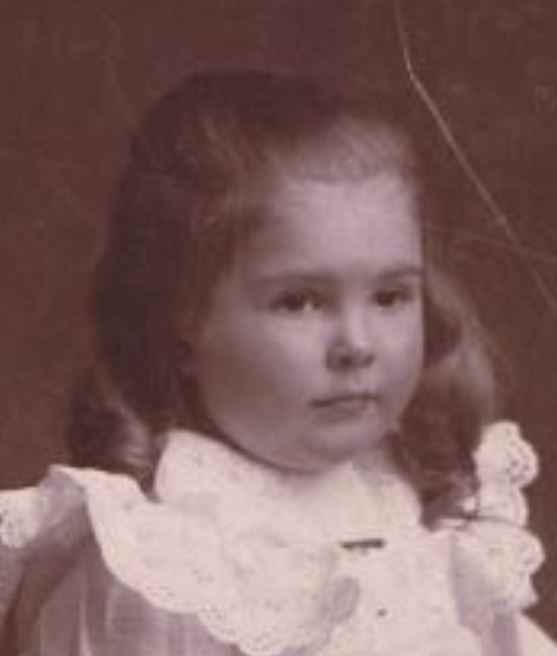
Some tasks require a researcher to step back from that computer database and venture out into the real world to get answers. That, as it's turning out, is apparently going to be the case for our darling little Hazel from Aberdeen, Washington. All we have to go on, at this point, is her first name—and really, I'm not entirely sure the "compliments of Hazel" note on the reverse of that abandoned photograph refers to the subject of the portrait—and the studio where the picture was taken.

I was hoping I'd have access to the city directories for Aberdeen from prior years, but face it: directories for a city the size of tiny Aberdeen in 1900 wouldn't be the type of collection you'd find in most libraries. Except, maybe, Aberdeen.

So I reached out to the Aberdeen public library system and asked what their policy was on lookup requests from out of the area. I'm waiting for a reference librarian to get back to me with an answer on when the Finch photography studio was in business in their community.

But who needs to wait, when we have expert opinions offered right here on this blog by reliable sources? Just this weekend, my mentor "Far Side" from the blog, Forgotten Old Photos, chimed in the detail that Hazel had her picture taken at a studio which was in existence from sometime in the 1890s through about 1910. Far Side estimated that the style of Hazel's clothing seemed to be mid-1890s, and that she looked to be around three years of age, which means she might have been born around 1892.

Meanwhile, I'm puzzling over whether I'll need to search through census records in Aberdeen alone, or extend that search to the surrounding area. Apparently, in the early years, Aberdeen was not the only city in what was then Chehalis County. There were also two other towns which competed with Aberdeen for business: Hoquiam and Cosmopolis.

Hoquiam was not even incorporated until 1890, so it might be possible that a family could have lived in that area and made the short trip to Aberdeen for family pictures in the mid 1890s, for instance. And Cosmopolis, notwithstanding its grand name, was a "city" of barely one thousand people at the turn of the century. Chances may have been good that Hazel's family could have come from anywhere in Chehalis County, not just from Aberdeen, itself.

Still, taking a quick glance at the 1900 census, there was only one family in Aberdeen, itself, with a daughter of the possible age to have been young enough to match the look of the girl in the picture taken in the mid-1890s. That was the middle child in the family of F. M. and Ella Owen. That Hazel was about six years of age by the time of the census, and had been born in Oregon.

Since the family had just moved from Oregon to Washington within the past year, it would make sense that the Owen family would want to send photos of their little ones back to family in Oregon. However, that would mean that the photograph would have had to be taken around 1900, not earlier. But why wouldn't the Owen family have taken one picture with all the children, not just the middle child?

Something tells me I need to delve further into the possibilities here. Hazel Owen of Aberdeen, Washington, may not be my gal.


Sunday, June 10, 2018

Taking Your Genealogical Research
on the Road


June is traditionally the month for dads and grads, but it is also the time when folks turn their minds to vacation plans. School's out and the weather's fine, so the start of summer is a natural time to take a trip.

For people like you and me, when our minds turn to vacation travel, we are likely to find a way to wangle a side trip to a cemetery or an archival collection—or at least a detour to drive by the home where our second great grandparents once lived. Call that nosy family history, but we just want to see the sights that were once important to our ancestors.

Traveling for genealogical purposes is getting to be a thing. I've taught a class at nearby libraries on taking that genealogical research on the road—I used to teach it right about now through mid-June, but then I had to move it back a month because I wanted to go traveling, too.

More than just how-to-pack-for-a-research-trip, though, genealogical travel is reaching far beyond that. I ran across an article recently, talking about "heritage tourism." While that was mainly a blurb promoting one particular cruise line, it did provide a handy label for the trend. While we've seen genealogy as a hobby climb in popularity over the past decade, we've also seen a widespread fascination with travel. Couple those two interests into one package and you've got a stellar seller.

I've already taken the opportunity to do some of my own "heritage tourism." I'm not talking about trips to the Fort Wayne or Salt Lake City genealogical libraries here, but actual travel packages coordinated by a genealogist for research in a specific destination. That's one part of our family's trip to Ireland a few years ago, when I participated in Donna Moughty's Dublin research tour.

There are so many different researching travel opportunities now—so many, in fact, that Cyndi's List includes a separate category, "Travel & Research." Admittedly, some of the links are old, but there are still enough to fill four pages in her website.

Those aren't the only resources for travel-and-genealogy combos. Many genealogical societies include tours among their offerings. The California Genealogical Society, for instance, just returned from a trip to the Family History Library in Salt Lake City this past May. The New England Historic Genealogical Society offers guided research tours to locations not only in the United States, but also in Canada and the British Isles—plus hosting tours at their own facilities in Boston.

For those researching their foreign origins, a first trip to the homeland might be more profitable under the direction of someone who has already been there, knows the best locations for research and has prepared the way with arrangements for housing and meals so the researcher can focus on the primary reason for the trip: find those ancestors. That's how I felt about Donna Moughty's program in Dublin. If I could find a similarly well-recommended program so I could get started with hands-on research in my family's home region in Poland, that would be a great way to approach the challenge.

There are a lot of how-to posts to read on what to do when taking your genealogical research on the road. For the most part, those tips—know the hours of operation for the archive, pack coins for photocopy machines, and other such mundane details—are useful for domestic forays. When you combine all the angst of having to pack a laundry list of research goals into a time-limited visit with the overarching challenges of doing it all in a foreign country (and maybe a foreign language, too), it sometimes is better to heed that old travel slogan and "leave the driving to us."

Saturday, June 9, 2018

Now Indexing: Iowa Birth Records


Quick batches: bet ya can't just do one!

For my monthly indexing project, this time I grabbed the record set called "Iowa Birth Records 1921 - 1942." The way the online indexing projects now work at FamilySearch.org, I can't seem to find what I'm looking for quickly. The lists are arranged differently, for some reason. So rather than scroll through endless lists to try and find one focusing on a geographic area of my own research interest, I just grabbed one. I told myself helping out with the Iowa birth records would at least tangentially relate to my own family circles: my mother was born in Iowa. Who knows? I might even index her own record.

What I failed to notice was the additional tag for this record set: "Quick batch." I had no idea how quick a quick batch could be! I picked my set, opened it up, read the instructions and set to work. I indexed just one birth certificate when the next instruction said I had finished the "set" and would I like to submit the "batch" now.

Talk about quick! I like to repeat the same record set in one session because that way I only have to go through the tedious process of reading all the instructions once. This time, I could rinse and repeat to my heart's content: each "batch" of work was only one birth certificate. I could do something as easy as that all day long.

When the web indexing system was revised several months ago, I had noticed that it is possible to set up groups to work on indexing projects. I'm not sure exactly how that works, but I'm game to experiment on it.

I would love to see our local genealogical society adopt a project to index at FamilySearch. There are all sorts of records scanned and available in browse-only mode; I'd love to see those things changed to searchable status. If there is anything we can do to get our pet projects online in that accessible status, that would be great. I'll have to test the system out and see if we can put together a group of volunteers who can rally behind our cause. That "many hands" approach has done wonders for volunteer projects in the past; this certainly is a worthy cause for giving back to the genealogical community.

Friday, June 8, 2018

Don't Think This One Will be Easy


So we find this hundred year old photo of an adorable, chubby-cheeked angel, and all it says on the back of the cabinet card is "Compliments of Hazel." The only other clue we have to go on is the studio imprint advertising the Finch photography services in Aberdeen, Washington.

Fortunately, we discover that Aberdeen, before the turn of the century—well, at least that century—had a population of less than four thousand people.

It would have been nice if Hazel's doting mother had at least indicated a surname, or signed her own name to her note, or, well, something. But she didn't, which leaves the question: with only a first name and a town name, can we find the right Hazel in the midst of four thousand people?

It all comes down to a guessing game. With multiple questions. What year was the picture taken? How old does Hazel look in this photograph? When was the studio in business?

Progressing through this guessing game turns out to have some tricky hidden roadblocks. For instance, though we can avail ourselves of guides for dating cabinet cards—the type of card stock used for this photograph—sometimes the details in the guides can leave an unsuspecting soul more puzzled afterwards than at the start.

Even if the plan was to approximate the date of the photo, subtract the subject's age from that to arrive at a birth year, then search the census records, the process is not so easily streamlined.

As it turns out, Aberdeen—currently located within the county of Gray's Harbor—was not always part of a county by this name. The county name had been changed from Chehalis by the state legislature in 1915 to differentiate it from the city by the same name, which was located in a different county entirely. Any governmental records used in our search for Hazel would be located under the county of Chehalis, not Gray's Harbor.

Yet another detail could cause a problem in our search. If Hazel's photograph were taken in the mid 1880s—perhaps indicating a birth year which could gain her an entry in the 1880 census—there was no 1880 census for the people of Aberdeen. Washington state was not admitted to the union until 1889. With no 1890 census to consult, the next time we'd be able to find Hazel might not be until the 1900 census.

Except for one thing: the detail causing us to not have access to the census records for the good people of Aberdeen in 1880 is the very reason we can access her name—hopefully—in territorial records shortly after that point. For the county of Chehalis, those territorial dates include the census taken in 1885, which might be more to the point of our search for Hazel.

While I am no expert in dating photographs, my guess is that, with the simplicity of the border for this card, it was an earlier iteration of the many variations in which such cabinet cards were issued. For a working hypothesis, we can start with the estimate that the photo was taken in 1885 and that Hazel might have been four or five years of age, perhaps even younger.

The only problem, though, is that the Ancestry collection holding that 1885 territorial census for Aberdeen also contains several other local census enumerations. Furthermore, it doesn't appear that the search can be as finely tuned as we can do for a regular census—in other words, the search results will tell me that the person in question lived in Washington, but not that she lived in Aberdeen. That would not be a problem if the universe of possibilities in that search result was twenty or less—thirty, even. But 180? Now, that's starting to edge into "exhaustive."