Showing posts with label Y-DNA. Show all posts

Friday, June 19, 2026

To go Deep, or Wide, or Not at All


Perhaps this is the genealogist's question: to go deep or wide when researching family lines. At the beginning, for many people, the idea of going deeply into the past seems a compelling goal. How far back can we go? What will we find in the stories of past generations?

The advent of genetic genealogy may have upended the draw of that proposition. After all, a sure-fire way to locate those umpteenth cousins in our tree is to build out the branches of our ancestors' collateral lines.

For the most part, that is where I've focused my time. After all, with upwards of twenty thousand DNA matches—if you count all the distant cousins in the mix—it takes a bushy tree indeed to find a place for each of those cousins. That is mostly the point of my biweekly count, incidentally: keeping track of the expanding family tree and my progress in filling in the blanks.

But when I get to a case like Elizabeth Plummer's—my mother-in-law's sixth great-grandmother—it hardly does me any good to add that ancestor's siblings into my in-laws' tree. Why? Because most DNA tests show matches that are capable of reaching back to the sixth cousin level. That means connecting descendants of fifth great-grandparents—if those cousins even share any genetic material in common at all.

Since it's my husband who stands in as test taker for my mother-in-law's genetic legacy, it would be a rare match indeed that would connect him to his seventh great-grandmother Elizabeth. And examining descendants of Elizabeth's siblings would mean tracing the lines of an eighth great grandparent.

That is the result of using the most widely available DNA test, the autosomal test. If, however, we had used either the Y-DNA test or the mitochondrial DNA test (mtDNA), our reach could be extended even farther. But those tests, in our case, would not apply. For one thing, Elizabeth Plummer lies on my mother-in-law's line of the family, so my husband's Y-DNA results would be of no help there. But for the mtDNA test, we could almost have qualified. The necessary matriline held steady for six generations—but then veered off to that woman's father's line, before returning to that ancestor's paternal grandmother, Elizabeth.

And so, we are left in the nether reaches of genetic genealogy. Choosing to trace the lines of Elizabeth Plummer's siblings would be an exercise chosen simply for the fun of it. With so many other fifth and sixth great-grandparents still a mystery to me, I'd take that as my cue to move on to other family history puzzles.

Thursday, January 8, 2026

Finding Daughters of Daughters


Problem: how to find whatever became of daughters when looking at the descendants of a colonial Virginia ancestor. That's the task I'll be facing this month when I ask that very question regarding my fifth great-grandfather John Carter.

More to the point: I'll specifically be looking for daughters of John Carter's daughters. Beyond that point, I'll extend the search to those granddaughters' daughters, and then some.

If you sense a matriline pursuit here, you are on to what my goal will be for this month. The problem is, first, determining just how many wives John Carter actually had. If you look at a privately-published genealogy book written by the husband of one of my distant cousins (also a Carter descendant by virtue of John's daughter Margaret Chew Carter, wife of Zachariah Taliaferro), you'd read that there were two wives: Elizabeth Armistead and Hannah Chew. Another published genealogy asserted the same.

There are other documented indications suggesting that the spousal count was actually three. That, as it turned out, was one of the questions I grappled with the last time I dug into the Carter family history in 2024. The mentions of grandchildren in some key extended family members' wills points to a third wife, who also had a daughter. But which daughters belonged to which mother? Records from that time period in the 1700s are scarce.

There is, of course, a modern research tool now available to us, especially suited for use in specific questions such as mine. If we want to determine which Carter children belonged to which of John Carter's wives, we can simply follow the genetic record. But which genetic record becomes key.

In a case like mine, where John Carter was my fifth great-grandfather, it would be difficult to isolate a genetic segment of reasonable size and confirm that that strand was specifically inherited from that ancestor—and shared with distant cousins in my own generation. Worse—as is the case with one Carter descendant I know—the relationship could be more distant than even my own, hampering the use of autosomal DNA testing even further.

There are other DNA tests with a more powerful reach, of course, and they are beginning to come into play in questions such as that of our John Carter. When I last explored questions about John Carter's line two years ago, I mentioned one study using Y-DNA to examine his own relationship to other Carter men in colonial Virginia. This study I became aware of, thanks to that Carter descendant I just mentioned, Patrick Jones, who included findings about this Carter family in his blog, Frequent Traveler Ancestry.

Thanks to Patrick's discovery of wills and legal documents on this Carter family, it has become quite clear that there was a wife whose name had not been included in those old Carter genealogies. And with the apparent question concerning which Carter descendants belonged to which of John Carter's wives, there is another powerful DNA test which can be called into play: the mitochondrial DNA test (mtDNA). 

In a post last August, Patrick outlined the possibility for such a project, and shared an example of a similar study which was reported in the Spring 2024 edition of the Journal of Genetic Genealogy.

In order to explore use of such a test project for our research question, it would require willing subjects who could claim one specific line of descent: a daughter of a daughter of a daughter reaching back to John Carter's wives. Proposing specific matrilines through documentation would be a first step in isolating possible project participants. Though piecing together that sort of pedigree may prove difficult, I certainly would like to see such a study become a reality.

Tuesday, October 7, 2025

A Targeted Testing Attempt


Though I started my DNA journey to confirm that closely-held family secret that we were, after all, Polish—and not Irish, as my grandfather had insisted—the very first DNA test I submitted didn't yield me much information at all.

That test was a targeted testing attempt on my part: I asked my brother if he would be willing to take a Y-DNA test. That test, currently offered by only one genetic genealogy company—Family Tree DNA in Houston, Texas—can reveal a deep ancestry, but only on one specific family line. That line, known as the patriline, belongs to the male test subject's father's father's father's ancestors on that one specific family line. Reaching much farther back in generations than the autosomal test can accurately reveal, its results are not wide as far as DNA cousins may go, but those results go deep.

While I'm grateful for my brother's willingness to serve as my proxy in seeking the truth about our father's genetic heritage—after all, women cannot test the Y-chromosome they don't have—his test has yet to provide me any solid leads. When I thought about this after the fact, I realized that not only was he my father's only son, but my dad—by then, long since passed away—had no brothers. Neither did his father, apparently. And I suspect that was the case in the generation preceding him.

Because this research question involves some generations relatively close to the present time, autosomal DNA testing could be the perfect tool for such a case. While I'm glad I have the results to my brother's Y-DNA test—with matches still being added over time as more people test—I asked my brother to also take the autosomal test. And I took one, too—at every genealogy company that offered such kits. I didn't want to miss any possible matches.

Perhaps it was serendipity that I discovered a lead. It was thanks to the auto-clusters program added to the tools at MyHeritage, which pointed out some unexpected Polish-American DNA cousins—in Wisconsin, of all places. It didn't, at first, make sense for someone whose immigrant family had settled not far from the docks of the New York City port where they first arrived in America. Of course, reviewing the details I had shared yesterday about the most likely locations for Polish immigrants to settle, that would make sense in hindsight.

Because I went overboard and tested at five different DNA companies, I checked for Polish matches at each of those testing locations. Apparently, I had company, for someone from that same Wisconsin line also tested at Ancestry.com. That connection turned out to be a godsend, for the administrator for that DNA cousin's test was quite knowledgeable about the family line, at least in the Wisconsin area, and also had found online resources back in Poland.

Where would we be in our research, if it weren't for other researchers willing to share what they have learned? When I first discovered these DNA matches, I had no clue how they connected to my family. There was certainly no sign of any geographic connection. Though I should have suspected it, that sleight of hand in slightly changing surnames came into play once again—from Zegarski descendants in Wisconsin to the surname Zegars in my New York City family's case. It took a leap of faith to make the first assumption, but as the DNA matches started piling up, it became far more obvious that I had found the connection.

But even so, those DNA matches didn't link with my research focus for this month—Thomas Puchała—but with his wife, Anastasia Zegarska. In fact, over ten years after my DNA test was taken, I've had many DNA matches added to the list of cousins connected to that Zegarski line of Thomas' wife. But for Thomas himself, I still have the same two DNA matches I've always had. Even if I step back a generation to Thomas' father Jan, I only have those two DNA matches—and they are close relatives to me, whom I know personally. There just aren't that many Puchała descendants to match, apparently.

Still, the question is: if we can't find any direct matches with the Puchała line, can we learn anything about the men in this patriline by inferring details from what we can discover about their wives? Let's take some time to check whether the DNA can lead us to any helpful records there. 

Sunday, October 5, 2025

Pursuing the Patriline


After visiting with genealogy friends who are pursuing their American Revolution Patriots—or, even more impressive, their Mayflower roots—spending a month to discover more about my father's own grandfather seems rather uninspiring. After all, many people have even met their own great-grandfather in person, but I'm still wandering through a paper maze, trying to learn who this person is.

For this month's goal from my Twelve Most Wanted for 2025, I'll make the switch from a summer season of exploring my father-in-law's roots to discovering more about my own father's ancestry during this fall. This, however, is not an easy task; remember, this was the man who was tight-lipped about his background. Like father, like son, it's been said, and in this case it applies well: my father had his own father as an example of how to keep a family secret.

In past years, I've worked on this patrilineal puzzle. Five years ago, Thomas Puchała claimed the featured spot for my goal in November, and the following year, I explored records showing his father to be either Johann Puchała—according to church records in Latin—or, more likely, Jan Puchała in the vernacular.

Though I have discovered Thomas' father's name, thus pushing the patriline back another generation, there is still so much to learn about this branch of my family. I have found that Thomas once lived in Lubichowo, a small village in Pomerania, where he was likely born in 1844. I also have found mention of his marriage to Anastasia Zegarska in 1868 in the nearby village of Czarnylas, also in what was at that time the country known as Prussia. The difficulty is that those details only came to me, thanks to transcriptions of documents posted on websites in Poland. I have yet to locate and download copies of the actual documents, a task to include in this month's research goals.

In pursuit of this patriline, thankfully I've had some DNA help, mostly through my brother's willingness to take a Y-DNA test, but also through the few matches we've found through autosomal testing. This month will call for closer examination of the updated cousin matches as well as ethnicity updates due out this month at Ancestry.com. And I'll still keep a close eye on those Y-DNA test results, in case an exact match pops up in a timely manner for this month's exploration.

Saturday, July 20, 2024

Why No Y?


Before we take our final leave of the Stevens quandary—the abrupt appearance and equally quick disappearance of Hugh Stevens—there's one last question I have. To put that question in shorthand, I'm wondering why there is no Y—as in Y-DNA, the genetic test which can reveal a subject's father's father's father back through time and even beyond the dates of genealogical records.

To test Hugh Stevens' supposed brother's line—that of John Stevens who immigrated to Lafayette, Indiana, in 1851—my husband took the Y-DNA test at Family Tree DNA. He tested for 111 markers, certainly far less than the 700 markers used in the most complete Y-DNA test available now, but still a sturdy indicator representing John Stevens' genetic legacy.

The result? After ten years of waiting, there are only two other men who match my husband at that 111 mark. The kicker is: neither of them is surnamed Stevens.

If I look at my husband's current matches at the next lowest level—67 markers—he has thirty two matches, but the closest of those is a genetic distance of three, not an exact match. Again, the test taker goes by a different surname. In fact, not one of those thirty two matches goes by the surname Stevens. We are not getting close here, either.

What could be the cause of this lack of results? Of course, the easiest answer could be that no one from this Stevens family has tested besides my husband. However, despite NPE possibilities—"not the parent expected"—another reason might be that there were no male descendants left to test on this patriline, other than my husband's own male cousins on the paternal side. My husband's paternal grandfather was an only son, and his father before him, though having one brother with surviving children, included a son who had no children of his own.

And that leads us back to immigrant John Stevens, the father of those two brothers. Could he have been the only surviving son of his father, as well? Or could this lack of Y-DNA matches be due to another reason—perhaps that our John Stevens wasn't really a Stevens son after all? It becomes quite a lonely planet here, when looked at through a lens like that.

No matter what the reason—only surviving Stevens patrilineal descendant or immigrant hiding under an alias—it's clear that no one else has yet tested who descends from that patriline, whatever name it turns out to be. And it's also clear that, with no further leads to answer our research questions, we need to set aside our study of John Stevens' Irish roots, likely for a very long time.


Sunday, June 16, 2024

Silence on the Y-DNA Line


Since today is reserved for honoring fathers—at least in the United States—my thoughts have turned to wondering about my own dad. Although he has been long gone, the mystery he left behind still lingers. Just like his father before him, he remains an enigma, even to the people who lived with him.

Though she never got the opportunity to meet him, let alone get to know him, my daughter calls my father "the chameleon." A business man with lots of acquaintances—the type of guy "everyone" knew—I doubt many truly knew him. He seemed to blend in effortlessly with his surroundings, an enigma that no one even noticed.

We, however, thought differently. When I, along with several cousins and siblings, learned that my father's father was not the Irish immigrant he purported to be, we began to suspect—and dig for—another story.

It was almost exactly eleven years ago this week when my brother agreed to meet me at a genealogy conference in southern California—my annual go-to place every June, and a ten-minute drive from his house—to become the willing subject of a specialized DNA test to examine the deep history of something called the patriline. This would tell us the truth about our father's father's father's...well, you get the idea.

We were pretty sure the answer wouldn't be the Irish story my much-older brother had heard his grandfather tell him. Though the signs had been well-hidden, our generation of that family had begun to point to a possible Polish heritage, just by sharing vague memories of what our parents had let slip, and what the older siblings and cousins could remember of their grandparents. That helped, of course, but being so generic, we wanted something pointing us in a more reliably specific direction.

When my brother's Y-DNA test results came back (he kindly appointed me as administrator of his test), we weren't surprised to learn that the great majority of men sharing his haplogroup descend from Polish ancestors. And yet, as far as matches go, my brother only had two at his testing level of sixty-seven markers. One was at a genetic distance of seven; the closer one was still at a far distance of three. No exact matches.

Match results have stayed that way since my brother tested in 2013. If there are any other men out there who connect at any closer range to this patriline, they certainly haven't decided to spring for a Y-DNA test. Granted, this information, combined with the more common autosomal DNA test and a lot of dedicated traditional genealogical detective work have taught me much about my father, but I am still learning more every day. DNA has been an excellent teacher, even though the original subject has remained silent to his students.

As I look over the many DNA matches I've found, both in my brother's test results and through my own at multiple testing companies, I realize not only how much DNA has taught me about my family, but how powerful DNA is, itself, in shaping who a person is.

I sometimes can't help noticing how, when I do or say something or make a particular choice, how it seems to echo one or other of my parents or, for those grandparents I did know, show me the connection to my relatives, and in turn, how those relatives were connected to their parents and grandparents. The DNA, though recombining in multiple ways, still passes down to us small signatures of what made each of those people who they were. DNA becomes their gift to us.

I sometimes wonder if the people who are most likely to take a DNA test are those for whom their parents—and their ancestors—are a mystery. They test because they don't know. That certainly was the driving force behind our family's collective attempt to discover the hidden story of our patriline.

While my brother's Y-DNA test results may seem to have yielded a deafening silence, on the flip side, that DNA is still speaking quite loudly. Every time I exhibit a tendency that reminds me of my father, it is as if he was still there with me—an eternal reminder of our connection. We are the way we are, in large part, because of our parents' DNA. And despite the frustrating silence from those specialized DNA test results, at least for one day this year, I can celebrate the person we're seeking through that Y-DNA test with a "happy Father's Day" thought.

Saturday, March 30, 2024

While We're in the
(Matrilineal) Neighborhood


While we're still in the matrilineal neighborhood—that is, that point of discussion more akin to an ancestor's "F.A.N. Club" than actual pedigree chart—I couldn't just move on simply because it is the end of one month's research project. Having just spent a month following the trail of my matrilineal ancestors—especially the one who, as her husband's executor, sold their home to the father of George Washington—I was primed to fall for a social media post yesterday.

Actually a reposting of a tweet, um, announcement on, well, you know where, the indefatigable researcher Debbie Kennett shone the light on some archaeological and DNA work being done on the unmarked burial ground of some of the president's close relatives. I had to do a double-take on the originating source's post, though, for the actual announcement began, "DNA study IDs descendants of George Washington from unmarked remains...."

Um...George Washington did not have any descendants—at least not any I know of. Perhaps DNA will once again turn out to spotlight genealogical surprises.

Looking into the article itself clears up the details. According to Family Tree DNA, which was involved in the project, the study actually focused on some descendants of George Washington's younger brothers, Samuel and John Augustine Washington. The study involved a collaboration between FTDNA and the Armed Forces DNA Identification Laboratory to help identify the remains in unidentified graves at Harewood, Samuel Washington's home in Charles Town, now in West Virginia.

One unique aspect of the study was its use of three different types of DNA testing to compare the genetic details of the unidentified, centuries-old burials with a known living descendant of the two younger Washington brothers. Of course, Y-DNA was used, thus allowing scientists to determine the haplogroup of that patriline, and thus infer the paternal haplogroup of George Washington, as well. The mitochondrial DNA test was used, allowing differentiation between each subject's maternal line, as sons would, of course, have different mothers than their father's mother. And finally, the more familiar autosomal DNA test was used, as well. (For those science geeks who prefer to dig into the details, the official report is online here.)

Though I am certainly not a Washington descendant, perhaps it was my near-brush with presidential proximity when I learned that my widowed seventh great-grandmother sold George Washington's father his childhood home that prompted me to notice that social media post shared by Debbie Kennett.

No matter what really caught my eye, this study reminds me that more and more historical and genealogical questions will be answered through genetic testing. I'm reminded of my realization last month of the quandary some Carter researchers face with the discovery of another wife of John Carter not mentioned in genealogical books of past centuries, thus leading researchers astray; now, we can find answers to those unresolved questions. I'm looking forward to seeing more such discoveries announced in the future. Their discovery and publication will certainly broaden our knowledge and, yes, simultaneously debunk some fondly-held family myths. 

Wednesday, February 28, 2024

Genealogy by Wikipedia
(and Other Modern Conveniences)


Every so often, a researcher might get lucky and discover an ancestor so well-known as to appear in widely-distributed publications. Such was the case, I discovered, when I began wrestling with the question of the likely kin of my fifth great-grandfather John Carter of colonial Virginia. As it turned out, not only was there more than one John Carter in that particular colony, but there was conjecture that our John Carter might have been related to the likes of Robert "King" Carter, considered the richest man in the colony.

Fine, I thought: I'll just look him up on Wikipedia. And from that start, I gleaned the basics of a possible family tree for Robert Carter. Among other details about the man's life, the key detail I sought was Robert Carter's parentage. Sure enough, his dad was another someone named John Carter. But was this the right John Carter, same as the John Carter who was supposedly my John Carter's father? After all, that Robert Carter had a half-brother named John Carter, too.

As you can imagine, I went from online entry to entry, tracing details on family related to this well-known colonial Carter. Indeed, in one of the Wikipedia entries, while the senior John Carter was noted to have "founded the more famous branch" of the Carter family, the writer of the article considered the founding immigrant of the other branch—our John Carter's ancestor, Thomas Carter of "Barford"—to possibly have been related, "since both came from the same English village" and both eventually settled in Lancaster County.

Looking at the Wikipedia entry for that Barford estate—also known as Verville—I can see the history of the property was outlined, detailing the purchase by Thomas Carter's father-in-law Edward Dale as a wedding present to the couple. And yet, even there, the article theorizes that Thomas Carter "may have been related to planter Col. John Carter" (father of Robert Carter), supporting that conjecture by observation of business transactions between the two.

While we may easily gain entry to a wealth of information through our modern access to technology, there is one other modern convenience which we may credit for untangling this volley of conjectures. That "convenience" is based on the science of genetics—putting the question of kinship to the test through the tool of DNA testing.

A paper published in 2020 by the Lancaster Virginia Historical Society examined the possibility of relationship between not two, but three Carter men in colonial Virginia. One of those three was John Carter, father of the famed Robert "King" Carter. The other was Thomas Carter—my John Carter's ancestor "of Barford," as Joseph Lyon Miller of the 1912 Carter genealogy portrayed him. The third Carter man, also named Thomas, was characterized as "Thomas Carter of Isle of Wight."

Authors Robert Mike Terry and Robert D. Lumsden used for their research the database from the Carter Y-DNA surname project hosted by testing company Family Tree DNA. Comparing the readouts from three groups of Carter participants specifically identified as descendants of one of the three target Carter ancestors—John, father of Robert "King" Carter; Thomas Carter of "Barford" (or more correctly, of Lancaster County); or Thomas Carter of the Isle of Wight—the researchers compared differences in mutations of each subject's DNA results to draw conclusions about their research question.

Their observations? After explaining the concept of genetic distance in comparisons of Y-DNA test results in general, the authors looked at the specific count of mutations between the subject groupings descended from each of the three Carter ancestors. Finding a genetic distance of thirteen between the group of Thomas of Lancaster descendants and those of John of Lancaster, they explained that any distance scoring over  five would push the relationship beyond what they called a "genealogical time frame." In other words, there would likely be no way to confirm relationships by documentation, as the common ancestor shared between the two groups would have to be someone alive nearly two thousand years ago.

Worse, comparing descendants of John to Thomas of Isle of Wight yielded a genetic distance of fifteen. Comparing descendants of the two Thomases stretched to a genetic distance of seventeen—pushing the likelihood of a shared common ancestor back over 2,500 years ago.

In their conclusion, while authors Terry and Lumsden noted that "only traditional genealogical research can document a family history," DNA testing—in their particular case, the use of Y-DNA—"can validate the stated pedigrees." Through their examination of test results for several documented descendants of the three Carter lines, Terry and Lumsden have provided compelling reasons to discard the reports of Carter descendants from previous centuries regarding conjecture over family connections. In addition, their lead in applying this modern tool to one genealogical question opens my eyes to ways to resolve other questions about our Carter ancestors—particularly the question of our John Carter's wives, which could also be put to the test using another tool, the mitochondrial DNA test for the matrilines leading back to each possible wife.

As Terry and Lumsden noted, while authors of those past works on the Carter lines may have offered their speculations "based on the then best available information...we must now disregard these assertions in light of the genetic genealogy tools that earlier researchers did not have."

For now, that settles my sister's question about whether our Carter line was related to the famed "King" Carter family. It certainly spares me from endless hours of attempting to find documentation as I pushed back through the generations. However, having spent the first part of this year traveling through the many records of John Carter's related lines, there is one more item of research business I need to bring up before we close the chapter on February's pursuit of my Twelve Most Wanted. Tomorrow, we'll look at that last detail on my to-do list.

Saturday, July 22, 2023

Wondering About Y


Yesterday, I received one of those rare emails from someone reaching out on behalf of a DNA match. This wasn't one of the thousands of autosomal matches I have, nor even regarding those of my husband or in-laws for whose accounts I serve as administrator. This one was for a Y-DNA match.

The match wasn't even a close one, but that hardly matters when you consider that this particular account has absolutely no exact matches in its Y-DNA results. The closest Y-DNA connections are at what Family Tree DNA calls a genetic distance of three. In other words, don't count on my paper trail to lead me to the answer regarding the most recent common forefather. Unless this patriline suddenly becomes related to royalty, the paper trail will fall away long before the family connection could be made.

I wonder about how helpful those long-range DNA tests—both the Y-DNA and the mitochondrial DNA—can be if no one turns out to be a close match. Of course, you never know, when you send off your sample in hopes of solving a genealogical mystery, whether you'll actually find any exact matches. And even if you do find an exact match—in other words, a genetic distance of zero—that revelation can lead you on a merry chase through ten generations. Or more.

Genetic genealogy, at least for these specialized tests like Y-DNA, turns out to be a Goldilocks proposition. We hope for not too big, not too small, but just right. Right enough to find paperwork to corroborate what the science is showing us. Right enough to make sense of the family tree as it wends its way backwards through history.

I suppose it all depends on which answers we are seeking when we decide to opt for the lesser-used DNA tests. If we simply have a curiosity about the deep history of our patriline, springing for the pricey "Big Y" can give us volumes of information. Just no possibility of linking to a paper trail.

That may be just fine for the archaeologists at heart, but for me, well, I (and my brother) just wanted to know who was the father of that mystery grandfather. It is much the same for my husband's quest: looking for more details on just who that Irish man was whose sons took off for America in 1849.

As my daughter pointed out last evening as I was muttering about the lack of exact matches, perhaps that traveling Irishman "daughtered out." No sons? Then no Y-DNA to pass to the next generation. And thus, no DNA matches to find. Some of us are in such dilemmas. And that might be the case for the two Y-DNA tests I administer.

Of course, someone in Ireland may spring for a Y-DNA test in the future and provide just the results we were hoping to match. That's what we never know when we take that first step in deciding to purchase a Y-DNA test. We hope. But we're not always satisfied.

In the meantime, I keep churning out the research. The old fashioned kind of research which relies on information recorded on paper, back in those earlier generations. When I find what I think might be my answer in records, perhaps that will someday be followed up by a genetic confirmation. At least, that would be the storybook ending of our best hopes.

Wednesday, August 3, 2022

In Search of an "Exact Match"


When considering research on a family member's patriline, of course the first research tool that springs to mind is the Y-DNA test. Yielding information on the male subject's father's father's father's line, this genetic test can help extend our reach far back into our family's history.

Fortunately for me, in my quest this month to discover anything further on my husband's second great-grandfather John Stevens, I already have access to such test results; my husband was kind enough to test eight years ago. Unfortunately, however, despite all the matches which have been added to his account at Family Tree DNA—the only company to offer a stand-alone Y-DNA test—my husband's results contain zero "exact matches" and precious few which are close enough for consideration.

However, when we signed him up to take the Y-DNA test, we also opted to have him join the Family Tree DNA Group Project for the Stevens surname. Currently, there are about 11,000 volunteer-led group projects affiliated with Family Tree DNA—thankfully including one project for the many spelling variants of the Stevens surname. The benefit of being part of such a group (free for those who have tested and fit the group parameters, such as surname or geographic area) is that the group's results, anonymized and listed by kit number, are organized by closeness of genetic relationship. For each "STR marker" (or Short Tandem Repeat), the key is to watch for mutations within those of similar paternal lineage.

While our Y-DNA test result itself does not place my husband as an "exact match" (no mutation difference) with any other customer, the group project aligns his results with those of other Stevens/Stephens men. Just looking at the results of those other closest customers' tests shows me one troubling sign: there are Stevens men from Ireland, sure enough—but also from Great Britain and Scotland, as well. Once again, not very helpful information—not, at least, if I'm hoping to discover just where immigrant John Stevens might have originated.

Though the test itself is powerful—results can reach back for up to fifteen generations—there are some drawbacks. The first is that not as many people purchase the Y-DNA test as the more familiar autosomal test provided at large companies such as Ancestry.com, 23andMe, or MyHeritage. Thus, the pool of possible matches is greatly reduced. The second problem is that, as the test is now marketed, customers have a choice of how many "markers" to purchase: from thirty seven markers all the way up to the 700 marker package. Of course, as the count of markers goes up, so does the price, which becomes a third inhibiting factor in finding matches.

I've waited now for eight years in hopes of finding an "exact match" to compare records with, and it is likely I may never find that hoped for DNA silver bullet. With that, I'm looking for another way to bypass my Stevens research brick wall and find my way back from Lafayette, Indiana, to John Stevens' supposed native home in County Mayo, Ireland. This is where I've made the decision to proceed slowly and head back to the basics. With that, tomorrow we'll explore a most basic first step: learning more about the general history of the Stevens surname.

Sunday, January 2, 2022

Seeking the Stevens Surname


DNA is figuring prominently in my research goals for 2022 already. Or perhaps it's just that I've had my father-in-law's research goals so firmly in mind that the idea is inserting itself into the rest of life.

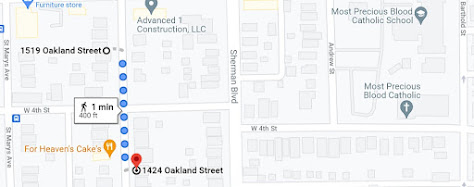
Was it just coincidence that, in researching another line last night—on my mother's ancestors, not even close to my father-in-law's Irish roots—I discovered my fifth cousin on my Tilson side just happened to live not more than four hundred feet from the house in Fort Wayne where my father-in-law's grandfather John Kelly Stevens once lived? Of course, we need to insert a good sixty years interim into the equation, but still: that's about as close a near-connection as I've ever been able to find on paths crossing between distant relatives.

With such "coincidences" in mind, and while in the midst of deciding who to add next to my Twelve Most Wanted list of research goals for the new year, I may as well tackle the founding immigrant on my father-in-law's patriline. John Kelly Stevens' own father, John Stevens, was the Irish immigrant whose arrival in Lafayette, Indiana, became the start of an American legacy for my father-in-law's descendants.

After years of researching the Stevens line, though, I've realized one disturbing detail: there don't seem to be any other Stevens men out there who share this line's Y-DNA. Nor can I find any indication of John Stevens' siblings, either in this country or in his supposed origin in County Mayo, Ireland, with one blip of an exception. This, despite the arrival in Lafeyette of a likely Stevens relative—possibly even a brother—who followed the same route from County Mayo to follow in John Stevens' path, just a year after he arrived here. And then disappeared.

Where did these Stevens people go? Where did they come from? And even more troublesome: was Stevens really their original surname? With stories I've heard in the world of family history research—everything from the anglicisation of Irish names to Irish tactics to avoid conscription in the British navy—I begin to wonder whether John Stevens' name was never really Stevens at all. I want to examine whether there are any reasonable connections in County Mayo for either John or Hugh Stevens (the other Stevens immigrant to Lafayette). If not, what could that surname have possibly been?

The eighth of my research goals for 2022 may seem messy, indeed, but sometimes we need to follow the path of questions with an unclear trajectory. Call this a month of exploration. It certainly isn't a clearly-planned target I'll be hitting. But it will be worth the effort to embark on this different type of learning expedition.


Above: Crossing paths: what are the chances? Map of neighborhood near downtown Fort Wayne, Indiana, showing the 1920s home of my father-in-law's grandfather John Kelly Stevens (1519 Oakland Street) within one minute's walking distance from the home where my distant Tilson cousin settled, decades afterwards.


Tuesday, December 14, 2021

But What About the Patriline?


It certainly can be encouraging, when tentatively dipping into new research territory, to find hits for searches on those foreign-sounding surnames. I had no problem getting results to my queries for the Polish surname Radomski, the maiden name—in the feminine form of Radomska—for my second great-grandmother. Even when I limited the search to her hometown of Lubichowo in the region of Pomerania, there were websites cheering me on to the right track.

Not so for Susanna Radomska's husband. His surname, supposedly Puchała, gave me very few signs that I was on the right track. Looking for anyone else besides their son Thomas—or whatever his given name really was in Polish—I could only come up with one other candidate in the same village.

That possibility was a woman by the name of Marianna Puchała, who in 1858 married a man listed as Johann Flizik. Predictably, within the year, they welcomed their firstborn, a daughter they named Anna Elisabeth. And then promptly dropped out of sight.

Oh great: a surname to search which is even more obscure than Puchała. This caused me grave doubts that I was on the right track. I headed back to my go-to websites for surname origins at Forebears.io, where they assured me that, yes, there is such a surname as Puchała—although a rather rare one. Predictably, the greatest occurrence of that name occurs in Poland, where over six thousand incidences of that surname adds up to a relative rank of 742.

Okay, so now I understand where my struggle lies: there aren't too many of us around. Perhaps all my distant cousins tried the same tactic as had my paternal grandfather: move to New York and change your name.

Just to make sure there are others of us around—that still wasn't convincing enough for a doubter like me—I visited good ol' FamilySearch.org, where I entered the plain search term of Puchała. When enough hits helped build my courage that I am not imaging this surname, I tried a few limiting additions: search for Puchała in Pomorskie, Poland (the term for the province of Pomerania), and even search in Lubichowo.

I found plenty of people claiming that surname, both in Poland and in the United States, which was encouraging. Of course, they aren't my people, but at least there are people with that name in existence—a detail I was beginning to doubt. After all, having had my brother test his Y-DNA has not, in all those seven years since he agreed to test, produced one single exact match on that patriline. Where are all these Puchałas?

There is, however, one other question which plagues me as I pursue this Puchała line. That may have been the surname I was led back to as I traced this family from my grandfather in New York, to his multiply-married mother's birthplace in Poland, thanks to yet another boost from DNA testing. But Puchała wasn't the surname which I found my grandfather using when I first spotted him in New York before his top-secret name change. The name he was using then, depending on who was trying to spell it for American documents, was Puchalski, not Puchała. Where did he get the "-ski" from? 

Sunday, May 2, 2021

Want to Make Progress?
Try Slow and Steady


It's been almost eight years now since I asked my sole surviving eligible candidate to test his DNA in an attempt to help our family overcome our patriline puzzle. That candidate was my brother, and the opportunity came with the Southern California Genealogical Society's Jamboree, where Family Tree DNA hosted a booth at their annual conference.

In the years following our receipt of those Y-DNA test results, we've gained not one exact match to my brother's 67 marker test. In the meantime, we've added the other tests from the DNA offerings, both mitochondrial and autosomal. Even though the pizzazz of winter holiday sales, DNA Day boosts like the one celebrated last Sunday, and upcoming Mother's Day sales have come and gone, the fizzle has gone out on DNA tests as tools for finding missing cousins. But I'm still glad we tested—both my brother before his passing, and for my own test results, as well.

Sometimes, the pursuit of our family history seems like a sprint, like those early days of testing opportunities. Other days, it seems as if a turtle can crawl faster. Just as people come and go, so do opportunities. Whereas each of the family accounts I administer once saw multiple dozens of new matches in every biweekly change I tracked, the rate of increases has slowed considerably—sometimes, to single digits over a two week period.

Though the test count has slowed to a dribble, it is we who need to keep a constant pace. Checking for close matches, bucketing each new match if possible, and adding new names to the extended family tree are certainly tasks that are more easily accomplished with the slower rate. Perhaps manageable is best.

One tool I've kept up with—although at varying rates, depending on any given week's other duties—is the expansion of the extended family trees. At the beginning, back in 2013, I decided to pursue an extended tree model, including collateral lines with all their descendants, as a way to place DNA matches within the family tree. That decision has proven beneficial over the years, as I've moved from over a thousand unknown matches to a more manageable count.

Still, it makes for unwieldy numbers. Combining my parents' separate trees this year, the total count is now up to 25,645--a upwards move of sixty four names in the past two weeks. And my in-laws' count is now up to 20,730 since adding 168 to their combined tree. Yet the matches amplify what I can accomplish on the trees as they verify the connection with most recent common ancestors. The two processes work in tandem.

Whether the general public loses its willingness to spring for DNA tests in the future will not impact my research questions for now as, thankfully, new tools have enabled me to figure out the missing family history answers that have stumped my family for decades. Perhaps, someday, we'll find an exact match to my brother's eight year old Y-DNA test and I'll finally learn more about my mysterious paternal grandfather's real surname. In the meantime, I'm happy to plod away with those routine biweekly tallies tracking my progress in that more-regular-than-stellar manner. There may not be any races won for this slow-and-steady mode of research, but eventually, slow and steady will count for something.  

Friday, January 8, 2021

Don't Forget DNA


Recently, one of the bloggers I read had put a quaint spin on what has become of the popularity of DNA testing: that the bloom has come off the rose of genetic genealogy. While that may be the case—after all, news reporting the identity of the long-mysterious Golden State Killer put a chill factor on this very technique—DNA matches have been the key to unlocking the identity of several of my own brick wall ancestors.

Despite the downturn in testing, I'll still look to matches for my research in the coming year. I couldn't possibly leave this month's topic of goal setting for genealogy without touching on the benefits of this tool.

When I first began using DNA as a tool to build my family trees—this June will mark eight years since I asked my brother to participate in testing his Y-DNA to trace our father's mystery patriline—the results received from the five companies I used for various family members more often prompted a puzzled "Who are these people?"

The frustration of receiving DNA matches without the corresponding aha! moments of names connected to specific spots on the pedigree chart can certainly be a disincentive to applying this tool. But what a powerful tool it has demonstrated itself to be, for those who apply it with perseverance. Sometimes, it has been a matter of needing to sit back and wait until a match actually appears on a specific family line—after all, it takes two to tango. Other times, the benefit only shows when we get smart about using additional tools to mine the information buried in the avalanche of those hundreds of matches that eventually do arrive in our account.

Sorting and categorizing those matches becomes the task that helps delineate which cousin belongs to which part of the family. It can seem a daunting task at the first—but the more matches which are correctly connected to your tree, the more matches will get clarified with that same organizing effort. It's as if finding the proper place for one match makes way for others to follow suit. I've used the "shared matches" tool at AncestryDNA, the "in common with" tool at Family Tree DNA, and—my favorite—the AutoClusters tool featured at MyHeritage, which was developed by Evert-Jan Blom of Genetic Affairs. All of these have helped sort the jumble into a manageable process.

You can be sure that the very DNA tools which led me to deduce who my paternal grandfather's parents might be are not going to be set aside just because I made this one discovery. That's all the more reason to keep using these techniques and tools in the coming year. As these tools assist me in visualizing where in that ever-expanding family tree those DNA matches belong, I am using each company's system to identify and flag each match and format the results so they can power me through further discoveries. At Ancestry, for instance, I'm tagging each DNA match and using their icon system to mark where each one belongs in the big picture. The more matches tied to the right line in the pedigree chart, the easier it is to link others to the right place.

That, in fact, is precisely what I have targeted to continue in 2021: going through the nearly two thousand DNA-matching cousins remaining—through fourth cousin, that is—and sorting them into the right pedigree lines. Along with that, I'll continue reaching out to matches to discuss our connection and share information, if I have a tidbit to share. That has become a research habit over the years, not something which needs to be written up as a "goal" for the new year.

With that, I've outlined my research goals and processes to maintain in the upcoming year. We'll take a look again in December to see how the big plan has fared in weathering the journey of the next eleven months. As we've learned from the past, it's not always easy to predict what a November will bring us—let alone a March. Perhaps the most practical new year's goal is to remain flexible as we navigate the unknowns in the year ahead.  

Wednesday, November 25, 2020

Playing the Wildcard


What do you do when the surname you're seeking comes in too many shapes and sizes to track online? You become best friends with the wildcard: the asterisk symbol, used in many search engines to signify an unknown letter or string of letters.

Granted, by now I'm fairly certain about the various surnames pinned on my paternal grandfather. I've seen him listed as Puhalski. And Puchalski, for those whose German background lends them proper understanding about that pronunciation. I've even seen one census enumerator get carried away and list my grandfather as Puhalaski. But when I jump across the ocean from those American records to the paper trail back home, the name was most likely Puchała.

Yes, that name came with the diacritical mark on that last syllable. But don't count on even Polish records getting that correct. As I explore the transcribed records online at the Pomeranian Genealogical Association, I've found some entries of that name with the diacritic, others without, and some—apparently to make up for past discrepancies—receiving a double dose.

Searching all those possibilities could be wearying, which is why I opted for the wildcard approach. Now that I've found what is the likely record of my grandfather's parents' marriage—Anastasia Zegarska to Thomas Puchała in Czarnylas in 1868—I thought I would try to push back another generation and find any sign of a family constellation anywhere in the historic region of Pomerania.

To stake out the territory as widely as possible, I calculated an earliest and latest possible birth year for Thomas Puchała, considering his wife was born in 1848. Then, I searched the entire region, rather than limiting the results to one parish, despite already establishing that Czarnylas was likely where the Zegarski family lived. There is always the possibility that Anastasia's fiance came from another village. 

Then, I searched only by surname, not given name, in case the priest in attendance decided to go against custom and record the name by traditional Polish spelling, rather than Latin. Besides, I wanted to see who else might have been in the family, if any patterns emerged.

Finally, rather than just searching for Puchała, I used the wildcard and searched for "Pucha*a" for the entire region of Pomerania. For that, I fervently hoped Puchała was not Poland's equivalent of Smith.

What I found was, shall we say, interesting. Here are the results for the years 1840 through 1875.


First, of course, I was ecstatic to see how the results fell into patterns. The results for some of the parish records fell clearly into family groups, with the preponderance of results falling to a village called Lubichowo. Checking Google Maps, I could tell the distance from that village to Czarnylas—Zegarski home base—was seven kilometers, a reasonable ninety minute walk.

More importantly, the Lubichowo Puchałas, Johann and Susanna, had a son named Thomas. The only baptism for a Puchała son named Thomas, I might add. From the top of the list above, with a baptism in 1842, we can count on that first listing for Marianna being Thomas' older sister, and we can also infer that Andreas in 1851, Franz in 1855, and Catharina in 1857 comprise the rest of Thomas' family.

From that point onward, extending beyond the time frame of this chart, the Puchała baptisms in Lubichowo reveal Thomas' own children, including (beyond this chart) my paternal grandfather Theodor in 1876.

Could it have been any easier? I had no idea "just trying" could actually yield an answer. Granted, in many cases, it doesn't. And after so much struggle to figure out who my paternal grandfather actually was—his identity changed so much, once he arrived in New York City—I was certainly primed for the worst, as far as research difficulty goes.

DNA matches—if we are fortunate enough to have those unknown distant cousins decide to test—can reach beyond the breach of paper trails and at least point us in a reasonable direction.

Of course, I have much more work ahead of me, in order to confirm my tentative conclusion. All those branches of the Zegarska sisters' families which led to successful DNA matches with descendants need to be documented—and added to my main tree, where I can pin the DNA tests to the right descendants. All those matches' centiMorgan counts need to be cross checked to see if they yield statistically reasonable relationships. And everything needs to be examined yet another time to make sure there is no alternate explanation for why I match all these Zegarska descendants.

As for the Puchała side of the family, I would love to find someone willing to participate in DNA testing, just to confirm our connection. That, however, is an unlikely scenario. Since 2014, I've waited for a Y-DNA match to my brother on this, our patriline, with no one even coming close. Of course, now that I can build out the tree, I can look for eligible descendants, but unless they, too, emigrated from Poland, there may be complications to obtaining a willing test participant.

Family history unfolds itself bit by bit in revealing to the researcher her hidden roots. At one time, it seemed inconceivable to me that I didn't really even know my own grandfather, much less where he came from. With the development of online resources with historic relevance—not to mention the powerhouse of genetic genealogy—what we presumed could never be knowable now lies behind a door which we have the power to actually open.


Above chart obtained by searching "Pucha*a" with dates 1840 through 1875 for baptisms in all parishes at Pomeranian Genealogical Association. 
Tuesday, December 10, 2019

"Oh, I Heard That One, Too"


Vanquishing those persistent family legends may become one of my goals as I work my way through my many family lines leading back to Virginia. The Booth surname, in particular, presents a family story which not only refuses to die, but has become so widespread that it may never be snuffed out.

Just thinking of the surname Booth may prompt you to recall one southern sympathizer of infamy who possessed that very name: John Wilkes Booth. Yes, the man at the center of the biggest man-hunt to date in 1865 Washington, D.C., may have been reported shot and killed, but the story still lives that the man who died at the hands of a Union sharpshooter may not have been John Wilkes Booth, after all. And in that bait and switch, in the conflagration of the moment, the real John Wilkes Booth supposedly escaped to the South and lived out his days at a horse ranch in Texas.

That horse ranch, supposedly, was none other than the property of Quinton Boothe, eldest son of William Alexander Boothe, my second great-grandfather. While it is true that Quinton Boothe moved to Texas after the Civil War, and while he did end up with a fair amount of property there, when I first heard that story as a child, I chalked it up to my maternal grandfather telling one of his fabulous, unbelievable stories. One could never be sure, with him, whether he was pulling the leg of his listeners for fun, or actually detailing a factual—though incredible—report.

Fast-forward to the age of the Internet and the birth of a new kind of family history research: online genealogy forums. I'd run into people on these forums who also were researching the Boothe/Booth line and, eventually, someone I never met would recount that very story of the incredible escape of John Wilkes Booth. We'd get into a group conversation about the tale, and the typical response would be, "Oh, I heard that one, too."

But...everyone hearing it? That's quite the persistent family legend for people so distantly related to have all heard the same thing.

The messiest part of the story, however, was one added detail: that the reason the assassin escaped to that particular location was that William Alexander Boothe's family was related to him.

Try as I might, I have not been able to find documentation demonstrating any such connection. Of course, you might already have assumed that outcome, and I wouldn't blame you—but you can't fault me for trying to demonstrate by evidence whether the vote is yay or nay about that claim. After all, the story is so persistent that I even got a phone call, a few years ago, from someone who was considering attempting legal procedures to exhume the supposed burial location for purposes of DNA testing.

That attempt has been tried before—even the nameless author of the blurb attached to John Wilkes Booth's Find A Grave memorial noted that "modern day legal efforts to exhume the remains for DNA testing and identification were eventually rejected."

Whether that question will ever be tested and put to rest is beyond the scope of my own family history—despite having actually found someone who contorted William Alexander Boothe's family tree on one online service to place him as brother of John Wilkes Booth and son of Junius Brutus Booth. What I can move towards, though, is to encourage male descendants of my William Alexander Boothe to participate in Y-DNA testing, especially joining the Booth DNA project at Family Tree DNA.

Though I don't yet know who my Alexander's father might have been, it turns out that, despite the loss of many early records in his native Nansemond County, Virginia, the very 1840 census enumeration in which I found his record puts his name only a few entries away from another man of the same surname. It is quite possible that, tracing a descendancy chart for the other Boothe families in Nansemond County, we could put together a project to test descendants of the various Boothe lines in that county to see which ones, if any, belong to the same line.

The big "if" in that case all depends on who that other Boothe man in Nansemond was—and if he had any sons...who had sons...who had sons...